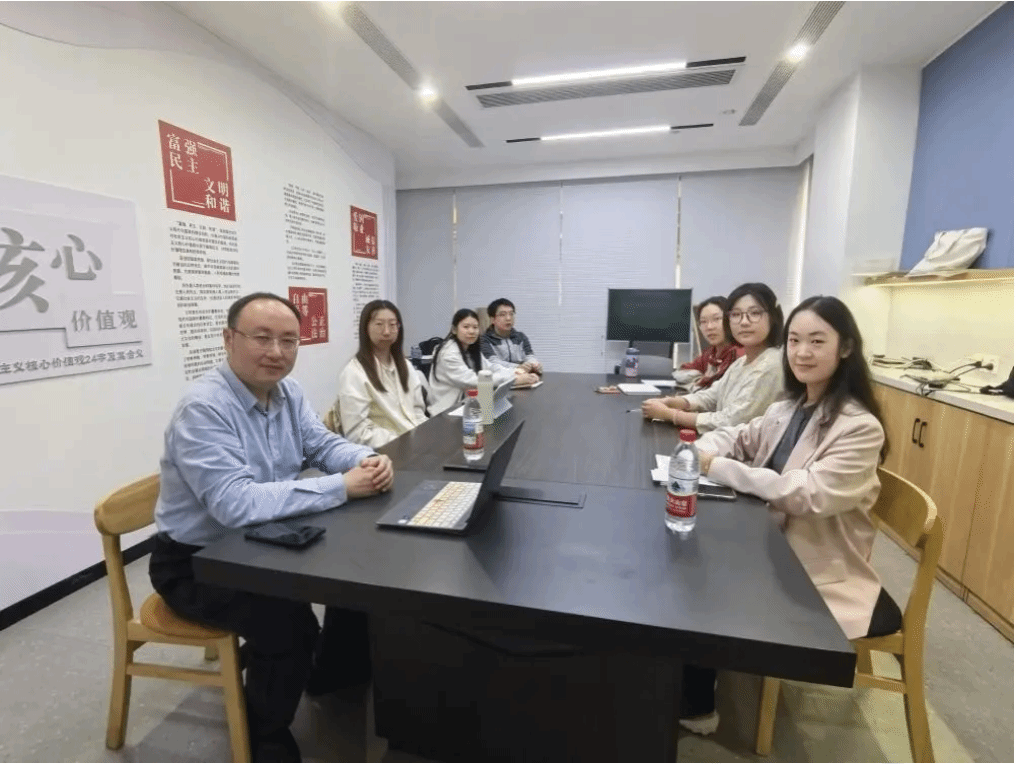
The Voice Of CCNU:On the afternoon of April 24, the eighth session of the “Liyun · Qiuzhi” History Reading Club, hosted by the School of History and Culture and co-organized by the School of Marxism, was successfully held in the one-stop community at Building 4 of the International Exchange Center. The event specially invited Professor Yan Peng from the Institute of Modern Chinese History as the keynote speaker, and was moderated by Wang Jurong, advisor of the Youth League Committee of the School of History and Culture. Centering on the theme “Be a Friend of Time: Historical Thinking in the Interaction between the Long-Term and the Present,” Professor Yan delivered an in-depth sharing. A number of students from the School of History and Culture and the School of Marxism participated in the discussion and exchange.
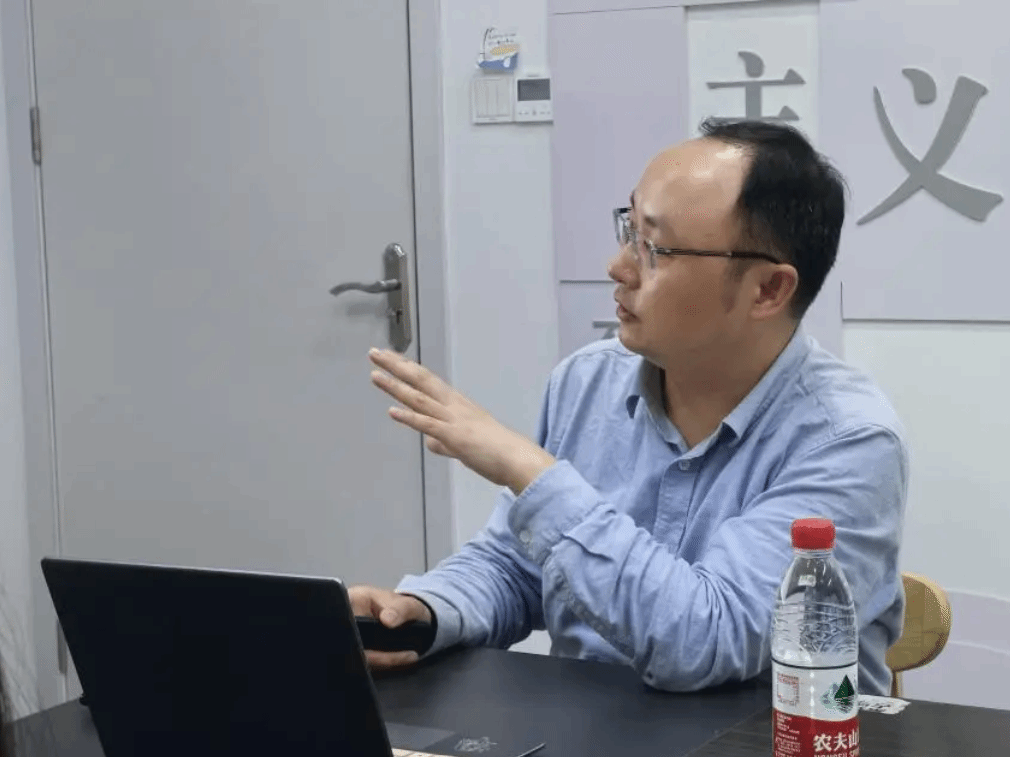
First, Professor Yan Peng pointed out that the core difference between history and other disciplines lies in its focus on “change,” and change always takes place within the dimension of time. The interaction of different types of time is precisely the primary foundation from which a sense of history arises. Moving forward from individual existence, the professor then put forward the proposition that “human beings are historical beings, and essentially temporal beings.” He referred to the concepts of the “I” and the “me” in Western psychology, explaining that self-consciousness connects the past through memory and bridges the future through imagination, making it a kind of temporal existence. It is only when natural life and self-consciousness are combined that an individual’s history is constituted.
Extending from individual history to macro-history, Professor Yan Peng, drawing on the perspective of historical materialism, pointed out that the nature of human beings as social animals determines the progression from “individual history” to “history with a capital H.” He stressed that history is a vehicle for humanity’s pursuit of meaning. Using Liu Zhiji’s Shitong (General Treatise on History) as an example, he elaborated on how the ancient Chinese sought the meaning of life through historical writing. From the Twenty-Four Histories to local gazetteers and genealogies, a unique culture of “historical immortality” was thus formed.
At the cognitive level of the discipline of history, Professor Yan Peng introduced Collingwood’s core view that “all history is the history of thought” and Croce’s that “all history is contemporary history.” Drawing on Gestalt psychology, he analyzed the differences and integration between physical time and psychological time, reminding students that while pursuing historical truth, one must not overlook the importance of the psychological world.
In terms of the division of temporal dimensions, Professor Yan Peng introduced Braudel’s theory of the three temporalities, elucidating the essential differences among historical phenomena at different time scales. He also drew on the life experiences of Sartre and Braudel to illustrate how individual circumstances shape one’s perception of time. He encouraged students to balance long-term and short-term perspectives in both learning and life—to remain patient when observing the course of history while decisively seizing present choices, and thus truly “be a friend of time.”
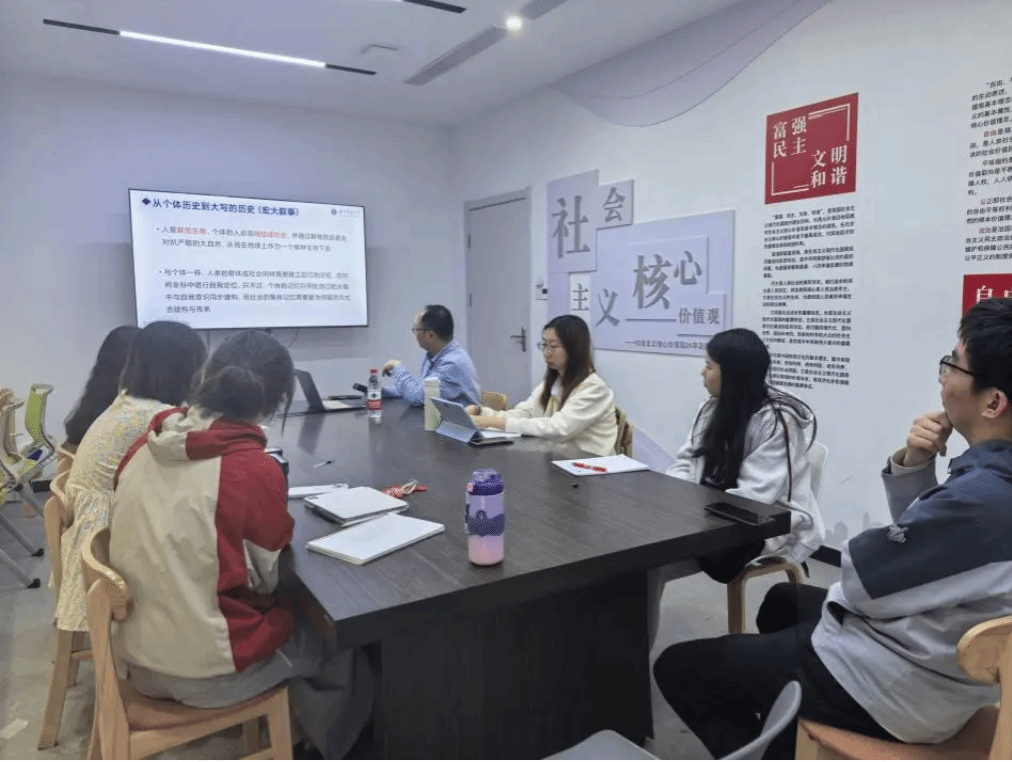
During the interactive session, students raised questions about the study of animal history and material culture history, as well as the direction of research topic selection in history. Professor Yan Peng proposed three core approaches: excavating historical sources, reasoning backwards from real-world problems, and entering through academic lineages. He also reminded students to clarify their value orientations in research and avoid blindly following trends.
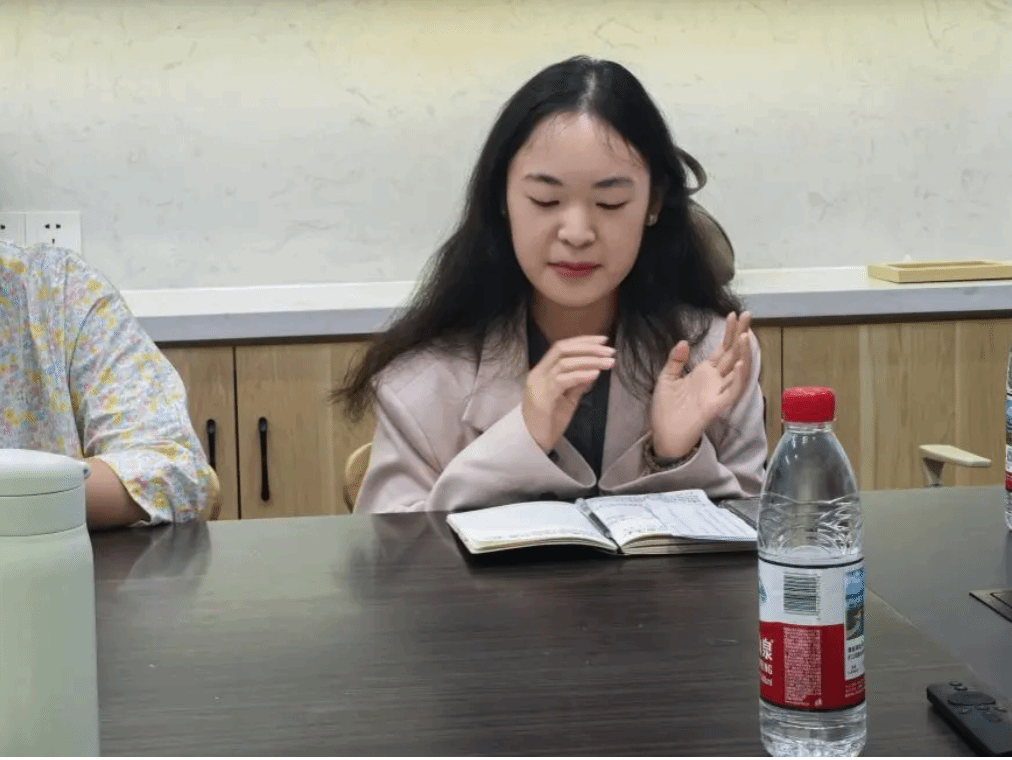
Moving from individual experience to a macro perspective, this lecture progressively analyzed the intrinsic relationship between history and time, offering students a fresh perspective on historical learning. Professor Yan Peng's profound exposition, which integrated history, philosophy, psychology, and other disciplines, not only enabled students to gain a deeper understanding of the nature and significance of history as a discipline, but also provided inspiration that combines theoretical depth with practical guidance for their future studies.
Source: School of History and Culture of CCNU
Translator: Yuan Yanglei
Date: May 17, 2026